
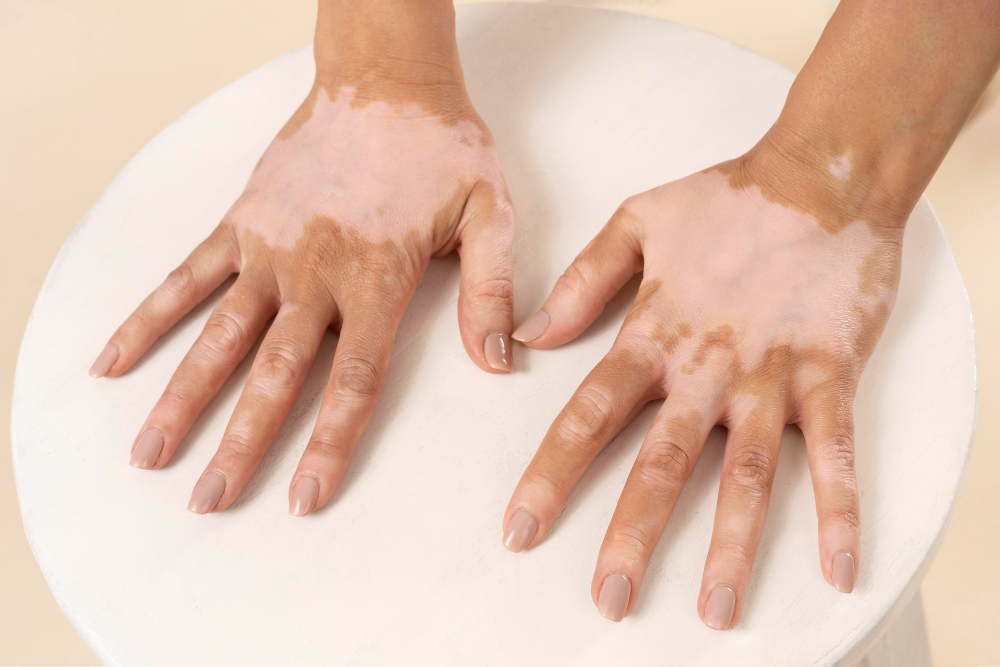
What is Vitiligo?
Vitiligo is a skin condition that causes patches of skin to lose their color. These patches can appear anywhere on the body. Often, they are more noticeable on people with darker skin. Vitiligo happens when the cells that make skin color, called melanocytes, stop working or die. As a result, the skin loses its pigment and turns white. Although vitiligo is not life-threatening, it can affect a person’s self-esteem and confidence. According to the World Health Organization, vitiligo affects about 1% of the world’s population.
Common Symptoms of Vitiligo
Usually, the main sign of vitiligo is white or lighter patches on the skin. However, there are other symptoms to watch for as well. For example, some people notice color loss in their hair, eyebrows, or eyelashes. In addition, the inside of the mouth or nose may also lose color. The patches can be small at first, but they may grow or spread over time. Sometimes, the edges of the patches are slightly darker or red.
Causes and Risk Factors
Doctors are still learning what causes vitiligo. However, most experts believe it is an autoimmune condition. This means the immune system attacks the body’s own cells by mistake. In this case, it targets the pigment cells in the skin. Sometimes, vitiligo runs in families, so genetics can play a role. Additionally, certain factors may increase the risk, such as:
Even though these factors may raise the risk, anyone can develop vitiligo at any age.
How is Vitiligo Diagnosed?
If you notice white patches on your skin, it is important to see a doctor. Usually, a dermatologist can diagnose vitiligo by looking at your skin. Sometimes, they use a special lamp called a Wood’s lamp to see the patches more clearly. In some cases, the doctor may take a small sample of skin, called a biopsy, to rule out other conditions. Blood tests may also be done to check for other autoimmune diseases. Early diagnosis helps start treatment sooner and may slow the spread of patches.
Treatment Options for Vitiligo
While there is no cure for vitiligo, several treatments can help restore skin color or slow its spread. The best treatment depends on the size, location, and number of patches. Some common vitiligo treatment options include:
For some people, counseling or support groups can help with the emotional impact of vitiligo. Always talk to a dermatologist before starting any treatment.
Living with Vitiligo: Tips and Lifestyle Guidance
Living with vitiligo can be challenging, but there are ways to manage it. First, protect your skin from the sun by using sunscreen every day. Sunburn can make patches more noticeable. Also, wearing hats and long sleeves can help. Some people use makeup or skin dyes to even out skin tone. In addition, joining a support group can provide comfort and advice. Remember, vitiligo does not affect your overall health, but caring for your skin and mental well-being is important.
Prevention and Early Detection
Currently, there is no sure way to prevent vitiligo. However, early detection can help manage the condition better. If you notice any color changes in your skin, see a dermatologist as soon as possible. Quick action may slow the spread of patches. Also, managing stress and protecting your skin from injury can help reduce risk. While you cannot always prevent vitiligo, staying alert to changes in your skin is important.
Conclusion
Vitiligo is a common skin condition that can affect anyone. Although it changes the skin’s appearance, it does not harm your health. With the right care and support, people with vitiligo can lead full, healthy lives. If you have concerns about your skin or notice new patches, consult a dermatologist Gracious Neuro, skin, hair & laser clinic for personalized advice on vitiligo.